Tractor Battery Maintenance: Simple Tricks to Extend Battery Life
 Published - 13 Oct 2025
by Tractor Junction

 Share
Social Share


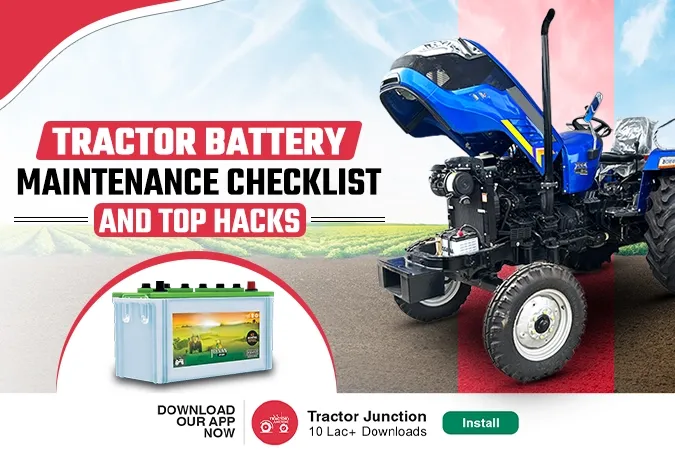
Tractors essentially run on diesel. But batteries are the ones that start the engine, provide power for lighting, and instrument panels. On average, a tractor battery can efficiently run for 3 to 5 years, and brands only offer a warranty of 3.5 years on them. This means an additional expense for farmers on battery replacement. Therefore, following a tractor battery maintenance schedule is important.
In this blog, we will explore some tractor battery maintenance tipsto avoid breakdowns and save on battery replacement.
Essential Tractor Battery Maintenance Checklist
Popular Implements


Most tractors in India come with lead-acid batteries. These battery types require regular maintenance as electrolytes evaporate with use. Therefore, timely battery servicing is crucial for proper functioning without affecting its capacity.
These simple tractor battery maintenance tips are easy to follow at home:
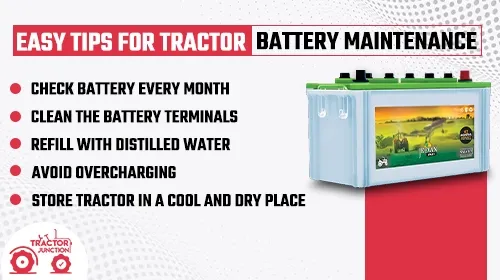
Check Battery Every Month
Since farmers use tractors almost every day, visual inspection of batteries every month will help them prevent potential issues.
- Check the battery case for cracks, swelling, bulges, and leakage.
- Confirm that the battery is tightly fixed to avoid damage from vibration.
- Inspect cables, clamps, and insulation for wear, corrosion, fraying, or loose connections.
Clean the Battery Terminals
Tractor battery terminals collect dirt, grime, and corrosion because of acid fumes, dust, and moisture from the field. These deposits block electricity flow, making it harder for the battery to start the tractor.
How to Clean Them:
- Disconnect the battery before cleaning (always the negative (-) terminal first).
- Clean the terminals and the battery top with the baking soda and water mixture.
- Use a stiff (non-spark) wire brush to remove corrosion.
- Rinse with clean water (low pressure), dry thoroughly.
- After reconnection (positive first, then negative), coat terminals with petroleum jelly or a commercial corrosion inhibitor to slow oxidation.
Refill Battery Cells with Distilled Water
If your tractor uses a flooded lead-acid battery, battery watering is essential. Without sufficient water, the battery will corrode, which may lead to failure.
How to Check and Rewater:
- Ensure the fluid covers the battery plates by about 10mm.
- Use only distilled water to top up the levels
- Avoid tap water as it contains minerals that may damage the battery.
Maintain Proper Charge
Tractor batteries discharge on their own, even when not in use. If you are not using the tractor much, start it every few weeks. Keep running the tractor engine for some time to recharge the battery.
How to Monitor Voltage:
- Use a voltmeter to check the charge level.
- A fully charged battery should read 12.6 to 12.8 volts when the tractor is off.
- A reading of 13.5 to 14.5 volts when the engine is running indicates the alternator is charging properly.
Off-Season Storage
Battery care is particularly important during the off-season when the tractor is not in use. That’s because the fluid evaporates in hot weather, and in severe cold, a weak battery may freeze and crack. Therefore, tractors should be stored in a cool and dry place, particularly away from direct sunlight during the off-season.
- Make sure the battery's vent holes are not blocked to allow gases to escape safely.
- Fully charge the battery before winter, as a fully charged battery is less likely to freeze.
How to Safely Handle a Tractor Battery When Maintaining?
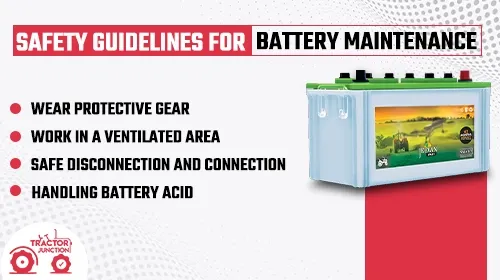
The lead-acid batteries contain sulfuric acid and produce hydrogen gas. These chemicals can explode if not handled carefully. While regular battery maintenance saves cost, following safe procedures while handling is also important for personal safety.
Here are the key tips you should follow for safe tractor battery maintenance:
1. Wear Personal Protective Equipment: Always wear appropriate gear to protect yourself from acid and potential sparks.
- Wear safety goggles to protect your eyes from acid splashes.
- Use acid-resistant gloves (like rubber or neoprene).
- Wear full clothes or overalls to protect your skin.
- Remove all metallic jewelry, as it can cause a short circuit if it accidentally touches the terminals.
2. Work in a Ventilated Area: Lead-acid batteries release hydrogen gas, which can easily catch fire.
- Keep all sparks, open flames, cigarettes, and heat away from the battery.
- Use insulated tools.
3. Safe Disconnection and Connection: Following the correct order when connecting and disconnecting prevents short-circuits.
- Always disconnect the negative (-) terminal first, then the positive (+).
- Always connect the positive (+) terminal first, then the negative (−) terminal last.
4. Handling Battery Acid:
- For non-sealed (flooded) lead-acid batteries, check the fluid level.
- If low, only add distilled or de-ionised water to bring the level to the designated line.
- Never add tap water or acid.
Top Hacks to Improve Your Tractor Battery Performance
Here are a few simple hacks to keep your tractor battery in top shape and improve its performance.
- Tractor batteries from known brands can work efficiently for a year before they need maintenance. However, in case you are using local batteries, check for leaks and damage every 6 months.
- Wipe the battery top with a baking soda solution to stop surface discharge caused by grime and moisture.
- Let the battery rest for 6 to 12 hours after running or charging before you check the voltage for an accurate health reading.
- Place a rubber mat beneath the battery to absorb tractor vibration, which destroys internal lead plates.
- Use a thermal blanket to insulate the battery from high engine heat, as heat cuts the battery's lifespan faster than cold.
When to Replace Your Tractor Battery?
Generally, a tractor battery will last 3 to 5 years if maintained properly. However, other factors, including usage, weather, and maintenance habits, also affect the battery life. Try replacing your battery if you experience:
- Difficulty Starting: The engine is not starting, or you hear a clicking sound when trying to start.
- Electrical Issues: Tractor lights or other electrical components are dim or not working.
- Rapid Discharge: The battery drains quickly even after fully charging.
- Physical Damage: The battery looks swollen, leaking, or has a bulging case.
- Low Electrolyte Levels: Frequent need to refill electrolyte levels shows the battery is not holding a charge effectively.
Conclusion
Regular tractor battery maintenance is important to run your machine smoothly and without interruptions. With regular inspections and safe handling techniques, you can increase the lifespan of your tractor battery. However, replace the battery when needed to prevent unexpected breakdowns or delays. Following these practices will have your tractor ready whenever you need it.
Certified Used Tractors
 Book Now


Top News
 October 25, 2026
Choosing the right tractor depends on your farm size, soil type, implements, and budget. A
Read More October 20, 2026
The Agri King T44 is a 39 HP tractor powered by a 3-cylinder Kirloskar engine.
Read More October 26, 2026
Are you looking for a tractor for regular farming activities such as ploughing, cultivation, rotavating
Read More October 12, 2026
Working in the field for eight or ten hours under the hot sun can be
Read More October 28, 2026
Buying a tractor is an important investment for any farmer. The right tractor should meet
Read More November 06, 2026
Indian farming conditions differ across regions, so farmers often prefer tractors that can handle both
Read More November 06, 2026
India's tractor retail market recorded 79,285 units in October 2026, compared with 76,898 units in
Read More November 06, 2026
पशुओं के लिए पौष्टिक हरा चारा मिलेगा और पशुपालकों की घटेगी लागत, जानें कौन-सी हैं
Read More November 06, 2026
जानें काली, दोमट और रेतीली मिट्टी में खेती के लिए कौन-सा ट्रैक्टर हो सकता है
Read More November 05, 2026
प्राकृतिक खेती, बहुफसली मॉडल और उन्नत सीड टेक्नोलॉजी से किसानों की आय बढ़ाने के बताए
Read MoreIn Other News