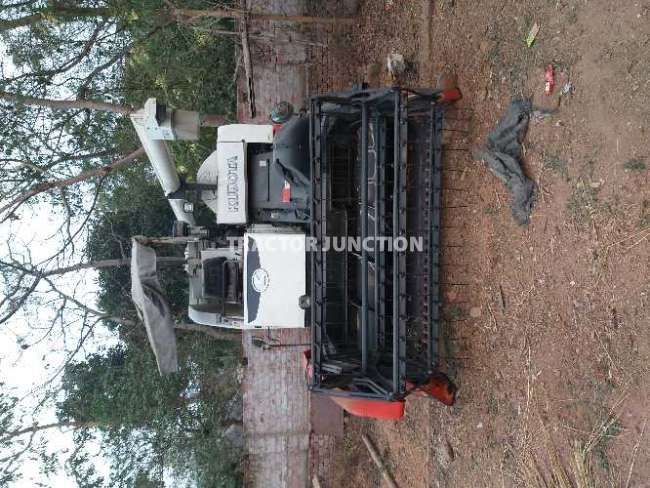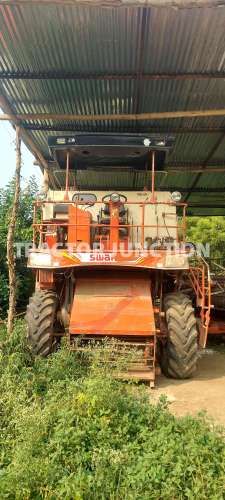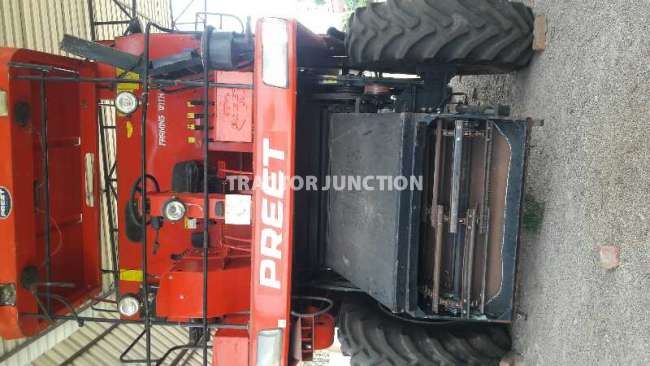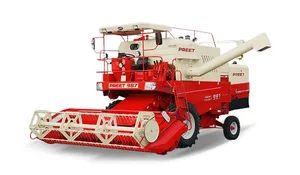
Preet 987

Preet 987 Harvester
Contact Dealer
Brand

Preet

Model Name

987

Power

101

Cutter Bar – Width

14 feet(4.3 m)

No Of Cylinder

6

Power Source

Self Propelled

Price*

₹ 23.50 Lakh*

Contact Dealer
Ad TractorJunction | Mobile App

About Preet 987 Harvester

Preet 987 Tractor Harvester is an efficient machine for farming in India. The farmers are extensively using Preet 987 Soyabean, Paddy, Wheat, Mustard harvester for their farms. In addition, Preet 987 harvester features are also excellent. That’s why the Preet 987 harvester machine is one of India's most preferred farming machines. Preet 987 price 2026 is also valuable for farmers. Moreover, the Preet 987 harvester machine is filled with highly modern technulogy to serve better in the field.

Preet 987 Soyabean, Paddy, Wheat, Mustard Combine Harvester Price

Preet 987 Soyabean, Paddy, Wheat, Mustard combine harvester price is valuable to the Indian farmers. You can also get a complete Preet 987 combine harvester price list at Tractor Junction. On the other hand, the Preet 987 combine on road price can differ from state to state due to several factors.

Preet 987 Harvester Features

Let’s know the Preet 987 harvester features. The working efficiency and performance of Preet 987 Tractor Harvester are also excellent. The engine of this Preet 987 has enormous power and comes at value for money Preet 987 combine price. So, let’s know more about Preet 987 Soyabean, Paddy, Wheat, Mustard harvester at Tractor Junction.

Preet 987 Combine Harvester Price at Tractor Junction

You can get a reliable Preet 987 combine price at Tractor Junction. Here we are with complete details of this harvester, including Preet 987 combine price 2026, specifications and others. Apart from this, you can also call us to get genuine Preet 987 combine on road price at your place.

Additionally, for those interested in financing options, consider the Preet 987 harvester Loan to help you purchase this machine.

Technical Specification 
Engine 
Model PCH-1049
Power  101 HP @ 2200 RPM 
No. of Cylinder  6
Air Cleaner  Combination of Dry & Wet Type 
Cooling System  Water Cooled 
Clutch 
Type  Single, Heavy Duty Dry Clutch 
Diameter (mm) 310 
Transmission 
No. Of Gears  3 Forward + 1 Reverse  4 Forward + 1 Reverse 
Gear Speed (km/hr)    
Forward  L H L H
1st Gear  2 4 1.6 2.5
2nd Gear  4 8 3.4 5.5
3rd Gear  8 20 6.2 10
4th Gear      13.7 22
Reverse  4 8 4.5 7.3
Cutter Bar 
For Wheat, Paddy & Others  4.3
Width (mm) 14 Feet (4.3m)
Cutting Height (mm) 65-1275
No. of Blades  57
No. of Gaurds  57
Stroke (mm) 85
Reel (rpm) 915
Dia (mm) Chain Type Feed Back 
For Maize & Sunflower 
Width 
11.25 Feet (3.4m), 10.25 Feet (3.12m)
No.of Rows  Front (mm) 6/7 
Spacing of Rows  Read (mm) 610/457
Threshing Mechanism 
Thresher Drum  Wheat (Rasp Bar) Paddy (Peg Tooth ) Maize (Rasp Bar)
Width (mm) 1250 1265 1250
Diameter of Drum  605 605 605
Speed (rpm) 540-1200  
Speed Adjustment  By means of Mechanical Variator 
Concave 
Clearance  Wheat (Rasp Bar) Paddy (Peg Tooth )
Front (mm) 17-30 13-35
Rear (mm) 7.5  9-12
Adjustment Mechanical 
Straw Walker 
No.of Straw Walker  5
No.of Steps  5
Width (mm) 234
Length (mm) 3770
Cleaning Sieves 
Area   
Upper Sieve Area (m2) 2.42
Lower Sieve Area (m2) 1.77
Capacity 
Grain Tank (m2) 2.5 
Fuel Tank (ltr.) 365
Battery 
No. of Batteries  2
Capacity & Rating of each  12 V, 100Ah
Tyre  Size  Ply Rating 
Front  18.4 / 15 x 30 12 pr / 14 pr 
Rear 9.00 x 16 16 pr 
Main Dimensions (Approx.) In Working  In Transport 
Length (mm) 8370 12280
Width (mm) 4665 3045
Height (mm) 3800  3800
Ground Clearance (mm) 340 -
Total Weight (kg) - 8580 Approx.

Similar Harvesters

Self Propelled Mahindra Gahir-800 img
Mahindra Gahir-800

Power

55-75 HP

Cutting Width

12 FT

For Price Click Here
Contact Dealer
Self Propelled Gahir Nippy-45 img
Gahir Nippy-45

Power

45 HP

Cutting Width

7.75 Feet

₹5.25 lac*
Contact Dealer
Self Propelled Vishal 328 Leal img
Vishal 328 Leal

Power

N/A

Cutting Width

13 Feet

₹21.50 lac*
Contact Dealer
Self Propelled Agristar HARVESTRAC 8060 T img
Agristar HARVESTRAC 8060 T

Power

N/A

Cutting Width

6.5 feet

For Price Click Here
Contact Dealer
Self Propelled Malkit 997 img
Malkit 997

Power

N/A

Cutting Width

N/A

₹26.40 lac*
Contact Dealer
Self Propelled Ks Agrotech GreenGold 220 Track Mini img
Ks Agrotech GreenGold 220 Track Mini

Power

N/A

Cutting Width

N/A

For Price Click Here
Contact Dealer
Self Propelled Jagatjit D-98 Self Propelled Wheeled Combine Harvester img
Jagatjit D-98 Self Propelled Wheeled Combine Harvester

Power

133 HP

Cutting Width

N/A

₹29.11 lac*
Contact Dealer
Self Propelled Hind Agro HIND 99 - Straw Reaper img
Hind Agro HIND 99 - Straw Reaper

Power

N/A

Cutting Width

N/A

For Price Click Here
Contact Dealer

View All Harvesters

Similar Used Harvester

Kartar Kartar 360 TAF Combine Harvester Year : 2021
Preet 987 Year : 2020

Preet 987

Price : ₹ 1900000

Hours : Less than 1000

Jaunpur, Uttar Pradesh
Kubota Harvest King DG68 Year : 2018

Kubota Harvest King DG68

Price : ₹ 1150000

Hours : 3001 - 4000

Cuddalore, Tamil Nadu
Kubota Kubota Dc68 Year : 2019

Kubota Kubota Dc68

Price : ₹ 1700000

Hours : 2001 - 3000

Jhargram, West Bengal
Swaraj Swaraj 8100 Nxt Year : 2016

Swaraj Swaraj 8100 Nxt

Price : ₹ 1000000

Hours : 3001 - 4000

Azamgarh, Uttar Pradesh
Preet 2020 Deluxe 987 Year : 2020

Preet 2020 Deluxe 987

Price : ₹ 1600000

Hours : 1001 - 2000

Fatehpur, Uttar Pradesh
Swaraj 963 Year : 2020

Swaraj 963

Price : ₹ 1650000

Hours : 8001 - 9000

Dakshin Dinajpur, West Bengal
John Deere W70 Year : 2022

John Deere W70

Price : ₹ 2200000

Hours : Less than 1000

Beed, Maharashtra

View All Used Harvester

Disclaimer:-

*The information and features are as on the date those are shared by Preet or Budni report and for the current features and variants the customer requires to visit the nearest Preet dealer. Prices shows above are Ex.Showroom price. All Prices are indicative it may be vary as per your buying condition and location. For Exact price kindly send On Road Price Request or visit the nearest Preet Tractor dealer.

Frequently Asked Questions About Combine Harvester

Ans. Brush cutter price range starts from Rs.8899 - 38187.

Ans. 11 Birla Tractor Tyres are Available in India.

Ans. Birla Tractor Tyre price range starts from Rs.3800 to 50000.

Ans. Farm Haul Platina – Rear 13.6 X 28, Shaan 6.00 X 16, Farm Haul Platina – Rear 12.4 X 28(s) etc, are the popular Birla tractor tyres.

Ans. Birla Tractor Tyres are Available in Many sizes, including 6.50 X 20, 7.50 X 16, 13.6 X 28, etc.

Ans. Haulage Implement price starts from Rs. 60000 in India and goes up to Rs. 3 lakh*.

Ans. Khedut Tractor Tipping Trailer, Farmking Tipping Trailer-Single Axle, Universal Non-Tipping Trailer are India's most popular Haulage equipments.

Ans. Soil Master, Fieldking, Landforce and many more Haulage implements brands are available at Tractor Junction.

Ans. 27 tractor Haulage equipment for sale are listed at Tractor Junction.

Ans. Type of Haulage Machine in India are Tractor Trailer, Tractor Water Tanker, Post Hole Diggers, Bale Spear and others.

Ans. Visit Tractor Junction and get the best Haulage equipment in India.

Ans. The India based company, Kesoram Industries Ltd, manufactures Birla Tractor Tyres.

Ans. Birla Tractor tyres offer supreme field grip in the toughest conditions of farming.

Ans. Here, you can choose tyre position, tyre size and popular Birla Tractor tyres easily. Also, you can compare tractor tyre models at Tractor Junction.

Ans. Kharif crops are grown during the monsoon season, requiring rain for good growth.

Ans. The Kharif season begins with the arrival of the monsoon, usually in June or July.

Ans. Examples include rice, maize, cotton, soybean, and pulses like green gram (moong daal) and black gram (urad daal).

Ans. The Kharif season lasts from June to October, with crops being harvested by the end of October.

Ans. Kharif crops are grown in the rainy season (June to October), while Rabi crops are sown in winter (October to December).

Ans. States like West Bengal, Uttar Pradesh, Punjab, and Maharashtra are major producers of Kharif crops.

Ans. Clayey soil is ideal for rice, while maize and millet grow well in sandy or loamy soil.

Ans. Fertilizers provide necessary nutrients, helping crops like rice and maize grow better during the Kharif season.

Ans. You can consume this for protein by eating them roasted, adding them to soups and salads, making tofu, or drinking soy milk.

Ans. Its seeds are used for planting crops, producing oil, and as a protein source in animal feed.

Ans. Some of the popular varieties of this crop are MACS 1407, JS 2034, and Phule Sangam (KDS 726).

Ans. The leading soybean-producing states in India are Madhya Pradesh, Maharashtra, and Rajasthan.

Ans. Successful farming of this crop requires good soil, proper irrigation, a favourable climate, and choosing the right variety for the region.

Ans. A mix of nitrogen, phosphorus, and potassium (NPK) is best for sugarcane.

Ans. Mancozeb and Carbendazim are commonly used fungicides for sugarcane.

Ans. Chlorpyrifos and Imidacloprid are often used to control sugarcane pests.

Ans. CO 86032 and CO 0238 are popular high-yield varieties in India.

Ans. Loamy soil with good drainage and moisture is best for sugarcane.

Ans. R579 and NCo 376 are known as top-performing global varieties.

Ans. It usually ranges from Rs 45,000 to Rs 60,000 per acre.

Ans. Sugarcane takes about 10 to 14 months to grow, depending on the variety and climate.

Ans. Moong plants usually mature in 60 to 70 days.

Ans. Moong is mainly grown in Kharif and Zaid (summer) seasons.

Ans. The average yield is about 8 to 12 quintals per acre.

Ans. Moong requires 400 to 600 mm of rainfall for good growth.

Ans. Well-drained loamy or light soils are best for moong.

Ans. The moong plant’s lifespan is around 2 to 3 months.

Ans. Yes, some varieties like TMB 37 can be grown in both seasons.

Ans. Yes, moong fixes nitrogen in the soil and improves fertility.

Ans. Usually no, unless there is a long dry spell between rains.

Ans. Harvest when 50% of the pods have matured and turned dry.

Ans. Bajra matures in about 80-100 days, depending on the variety.

Ans. Sow bajra from June to mid-July. In South India, sow in September-October.

Ans. Popular varieties include HHB 67 Improved, GHB 558, ICTP 8203, and Pusa 605.

Ans. Common equipments includes a rotavator, a seed drill, a harrow, and a thresher.

Ans. Sandy, loamy, or light black soils with a pH of 6.5 to 8.0 are best.

Ans. Apply nitrogen, phosphorus, and potassium based on soil test results.

Ans. Use quality seeds, proper spacing, timely irrigation, and pest control.

Ans. Sorghum, also known as jowar, is a hardy cereal crop that grows well in warm and semi-arid regions. It is used for human food, livestock fodder, and biofuel production.

Ans. Sorghum grows best in well-drained sandy loam or loamy soils. It does not tolerate waterlogged conditions, so proper drainage is essential for healthy growth.

Ans. For the Kharif season, sorghum is usually sown from late June to early July after the monsoon begins. For the Rabi season, sowing takes place between October and November.

Ans. Rows should be spaced 40 to 45 cm apart, and plants should be 15 to 20 cm apart. Seeds should be sown at a depth of 3 to 5 cm with a seed rate of 8 to 12 kg per hectare.

Ans. Sorghum requires limited irrigation. Light watering is needed after sowing to aid germination, while additional irrigation should be provided at critical stages such as tillering, flowering, and grain filling. Over-irrigation must be avoided.

Ans. Sorghum is susceptible to pests like stem borer and shoot fly, and diseases such as downy mildew. Using resistant varieties, timely sowing, and appropriate chemical sprays can help manage these problems effectively.

Ans. Depending on the variety and growing season, sorghum usually reaches physiological maturity in 90 to 120 days.

Ans. What is the best time to sow urad?

Ans. Light to medium loamy soil with good drainage and a pH of 6.5 to 7.5 is ideal for urad cultivation in India.

Ans. For black gram cultivation, 15 to 20 kg of seed per hectare is sufficient, preferably sown in rows.

Ans. Yellow mosaic and leaf spot are common diseases, while whitefly, aphids, and pod borer are major pests affecting the urad bean.

Ans. Urad generally matures in 70 to 90 days, and timely harvesting helps prevent grain loss.

Ans. With improved practices, farmers can achieve 10–15 quintals per hectare.

Ans. Dry the grains to 10–12 percent moisture and store them in clean, dry jute or HDPE bags to protect the quality.

Ans. No, excess nitrogen increases plant growth but reduces grain formation, so balanced nutrition works best for cultivating black gram.

Ans. It is not compulsory, but Rhizobium treatment improves nitrogen fixation and supports healthier plants in black gram varieties.

Ans. Yes, due to low input cost, minimal irrigation, and short duration, urad farming is highly profitable for small farmers.

Close
Call Now Request Call Back