Top 10 Types of Farming in India – Benefits & Uses
 Published - 21 Jun 2026
by Tractor Junction

 Share
Social Share


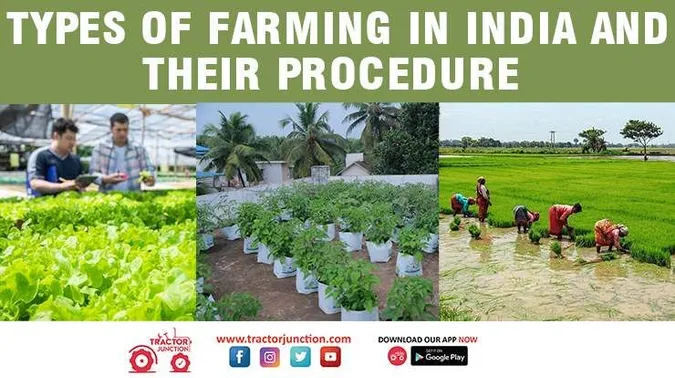
India has a diversified range of farming systems including commercial farming, subsistence farming, organic farming, mixed farming, plantation farming, etc. These various farming systems contribute significantly towards food security. These types of agriculture in India help the farmers to grow more productivity. Also, these agricultural practices depend extensively on factors like climate, soil, water, and regional necessities.
Different Types of Agriculture in India
In this blog, we will discuss the top 10 types of farming agriculture in India, additional agriculture methods, benefits, examples, crops grown, and state-wise practices. Besides this, the article also covers traditional, modern, organic, natural, commercial, and specialized methods to provide a complete understanding to learners, farmers, researchers, and students.
What is Farming?
Farming Farming systems in India involve the planned methods of growing plant products and raising animals that provide food, fiber, raw materials, and other essential resources. These types of farming in India depend upon various aspects such as:
- Soil fertility
- Climate conditions
- Water availability
- Technology usage
- Purpose of farming
- Farm size and resources
India is using the methods of traditional farming, modern farming, and mixed systems to satisfy the demands of both household consumption and the market. Farmers, by knowing these differences, can make a decision to use the appropriate method, and thus, they can achieve a higher yield. Understanding the different types of agriculture helps farmers choose suitable methods for their farming.
Top 10 Types Of Farming In India
India’s agricultural practices can be broadly categorized into various types, each suited to different conditions and needs. Here’s a detailed look at them:
1. Subsistence Farming

This type of farming focuses on growing crops for personal consumption rather than for sale. It’s common among small and marginal farmers who have limited resources.
Also, subsistence farming is mainly practiced in rural areas where farming is a way of life.
- Procedure: Farmers use traditional tools and methods, such as plows and bullocks, with little to no use of modern technology.
- Benefits: Low investment, suitable for small landholdings, and ensures food security for families. It’s cost-effective and provides food for personal needs.
- Role: It supports rural livelihoods and provides essential food for small farming communities, promoting self-reliance.
- Popular crops : Rice, wheat, maize, and pulses.
- Key States: Jharkhand, Odisha, Chhattisgarh, Madhya Pradesh
2. Commercial Farming

This type of farming focuses on growing crops and raising livestock for sale in local or international markets. It’s often practiced on a large scale with the primary aim of generating profit.
- Procedure: Uses modern machinery, high-yielding varieties (HYVs), chemical fertilizers, pesticides, and advanced irrigation techniques.
- Benefits: Higher productivity, better profits, efficient use of resources, and contributes significantly to the economy.
- Role: Major contributor to India’s agricultural exports, industrial raw materials, and employment generation.
- Popular crops : Cotton, sugarcane, rice, wheat, and vegetables.
- Key States: Punjab, Haryana, Andhra Pradesh, Maharashtra
3. Terrace Farming

This type of farming is used in hilly regions to prevent soil erosion and manage water flow effectively.
- Procedure: Creating step-like terraces on slopes for crop cultivation.
- Benefits: Conserves soil, improves water usage, prevents landslides, and makes farming possible on slopes.
- Role: Supports agricultural activities in mountainous regions like the Himalayas, contributing to local economies.
- Popular crops : Rice, tea, various fruits and vegetables.
- Key States: Himachal Pradesh, Uttarakhand, Assam, Meghalaya
4. Dry Land Farming

Dryland farming is practiced in arid and semi-arid regions where water is scarce. This type of farming focuses on maximizing the use of available moisture.
- Procedure: Uses drought-resistant crops, water-conservation techniques, deep ploughing, and mulching.
- Benefits: Makes farming possible in low-rainfall areas, promotes water efficiency, and improves soil health.
- Role: Essential for ensuring food security in drought-prone regions and promoting resilient agriculture.
- Popular crops : Millets, pulses, oilseeds
- Key States: Rajasthan, Telangana, Maharashtra, Karnataka
5. Wetland Farming

Wetland farming is a method used in areas with abundant water supply, such as river basins and coastal regions.
- Procedure: Paddy fields are commonly used, where water is allowed to accumulate to grow crops like rice. Requires well-structured irrigation systems and water management techniques.
- Benefits: High productivity, particularly for crops like rice. Improved soil fertility due to water retention.
- Role: This type of farming is essential for rice cultivation, particularly in states like West Bengal, Assam, and Kerala.
- Popular crops : Rice, jute, sugarcane
- Key States: Kerala, West Bengal, Assam, Tamil Nadu
6. Organic Farming

This type of farming avoids the use of chemical fertilizers, pesticides, and genetically modified organisms (GMOs) to produce food naturally.
- Procedure: Utilizes organic fertilizers like compost, manure, and bio-fertilizers. Crop rotation, green manuring, and natural pest control methods are practiced.
- Benefits: Eco-friendly, enhances soil fertility, provides healthier produce, and preserves biodiversity.
- Role: Vital for promoting sustainable agriculture and meeting the growing demand for organic products.
- Popular crops : Organic vegetables, millet, fruits, spices
- Key States: Sikkim, Uttarakhand, Kerala
7. Mixed Farming
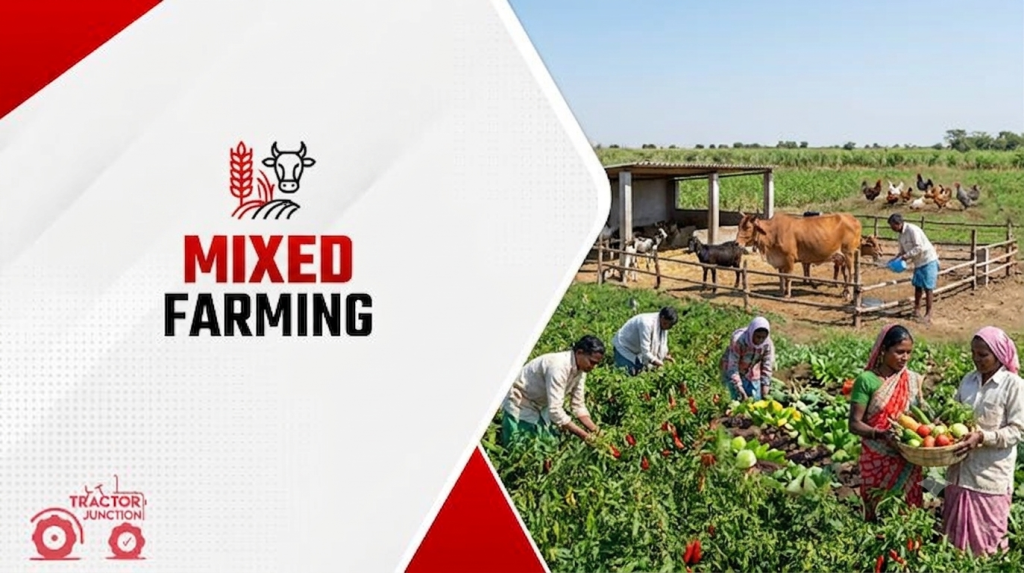
Mixed farming is a method of containing animal husbandry and crop cultivation. In mixed farming, farmers take care of the crop and livestock together. This assists the farmers to live on their lives as well as promote sustainability. The most widely used cattle that are utilized in mixed farming are cows, goats and poultry.
This method provides multiple sources of income and reduces the risk of crop failure. Even if a farmer faces crop failure, they can rely on income from cattle rearing.
- Process: Farmers are required to separated areas for crop fields, animal shelters, and grazing pastures.
- Advantages: It provides financial security & animal manure can easily replacethe chemical fertilizers
- Function: Mixed farming helps farmers maintain profitability even if crop production is affected by adverse weather conditions.
- Crops: Wheat, maize, fodder crops
- Key States: UP, Punjab, Haryana
8. Plantation Farming
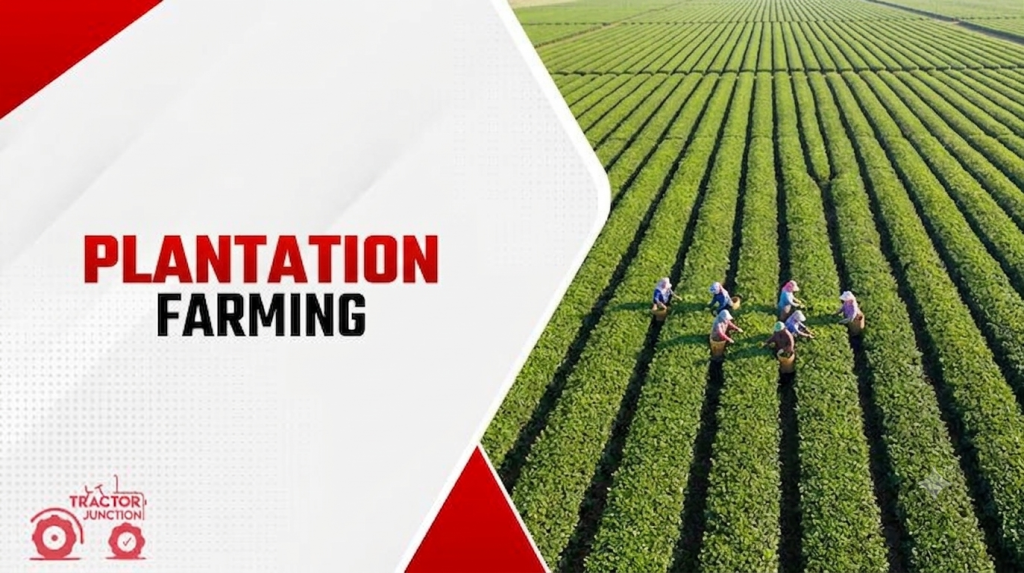
Plantation farming is a type of commercial farming where a single crop is grown on a large scale. This type of farming is mainly practiced for export & import. The crops grow using scientific farming techniques and modern farm machinery. Crops of plantation farming are highly profitable and generate employment.
- Process: Large scale cultivation on big lands using scientific methods.
- Advantages: It offers profit, increases export earnings, & employment generation.
- Function: This farming contributes significantly to India's agricultural exports.
- Crops: coffee,Tea, rubber, coconut.
- Key States: Assam, Kerala, Karnataka, Tamil Nadu.
9. Cooperative Farming

This type of farming involves pooling resources and efforts from multiple farmers to achieve better productivity and profits.
- Procedure: Farmers form cooperatives, share land, equipment, and resources. Decision-making is usually democratic, and profits are shared among members.
- Benefits: Economies of scale, better bargaining power, access to better technology, and reduced costs.
- Role: Particularly useful for small and marginal farmers who lack individual resources to invest in advanced farming techniques.
- Popular crops : Vegetables, grains, sugarcane
- Key States: Gujarat, Maharashtra, Karnataka
10. Ley Farming

This type of farming involves the systematic rotation of crops and pastures to improve soil fertility and provide feed for livestock.
- Procedure: Cultivating pastures and crops alternately, allowing the soil to rejuvenate naturally.
- Benefits: Enhances soil fertility, prevents soil erosion, and provides fodder for animals.
- Role: Especially useful in mixed farming systems, promoting balanced agricultural productivity.
- Popular crops : Fodder, legumes, grasses
- Top Producing States: All over India
Modern Types of Farming in India
India's modern agriculture is shifting from labor-intensive techniques of the past, to high-tech, data-driven and resource-efficient farming methods. It aims to counter climate adaptation and shrinking land-sizes.
Types:
- Vertical farming: Plants are grown in multilevel stacked layers under LED lights with hydroponics system.
- Greenhouse farming: This involves growing crops in a protected structure with translucent wall and roofing (generally glass or clear plastics) which is designed to provide a fully controlled microclimate.
- Hydroponic Farming: Growing of plant without soil. Instead the plant gets growing medium like water solution enriched with plant nutrients. This conserves water and enhances productivity.
- Aquaculture Farming: This is the commercial breeding, rearing and harvesting of fish, crustacean, mollusks and aquatic plants.
- Agroforestry: This implies the cultivation of crops as well as trees on the same land in order to increase the soil fertility and the environmental balance.
- Multi-Layer farming: This involves cultivation of multiple crop varieties having different height in same land area for increased income.
Factors Affecting Farming in India
Various factors influence farming in India. The types of farming used are affected by several things, such as:
- Soil Quality: The type and fertility of soil determine which crops can grow successfully.
- Climate: Temperature, humidity, and seasonal changes affect crop growth.
- Rainfall: Water availability from rain or irrigation systems plays a big role.
- Resources: Access to tools, machinery, seeds, and fertilizers impacts farming efficiency.
- Pests and Diseases: These can destroy crops and reduce yields if not controlled properly.
- Government Policies: Subsidies, support programs, and regulations can encourage or limit farming practices.
- Market Demand: What’s in demand influences what farmers choose to grow.
Understanding these factors helps farmers adopt suitable types of farming to improve productivity and income.
Some Other Factors
Other factors also play a role in deciding the types of farming used in India:
- Education & Awareness: Farmers’ knowledge about modern techniques and practices affects productivity.
- Access to Credit: Loans and financial support help farmers buy better tools and seeds.
- Technology Adoption: Using advanced machinery and irrigation systems can increase efficiency.
- Cultural Practices: Local traditions and customs can influence the choice of crops and farming methods.
- Transport Facilities: Easy access to markets helps farmers sell their produce at better prices.
Improving these factors can boost farming success and ensure better crop yields.
Government Subsidies and Schemes in India for Farming (Centre & State)
Here are the top 6 Government Subsidies and Schemes in India for Farming are listed below:
1. PM Kisan Samman Nidhi
The government is giving approximately Rs. 6,000 to farmers every year. The money goes directly into their bank account. It is very helpful to the farmers to buy good seeds, fertilizers and to manage petty cash.
2. Pradhan Mantri Fasal Bima Yojana (PMFBY)
It is a crop insurance program. The farmers those crops damaged due to bad weather like rain, flood, drought, and even pests, the farmers get the money that is equivalent to the damage as compensation. The farmers have to pay a small premium only.
3. Kisan Credit Card (KCC) Scheme
Farmers are able to get loans for crop production at a low rate of interest. They also get the benefit that if they do the repayment on time, the interest rate is going to be reduced further. Note: Farmers should have their farmer id along with them.
4. Subsidy on Farm Machinery (SMAM)
The government provides subsidies on tractors, power tillers, harvesters, and other machines. These machines help the farmer to reduce labor costs and increase his productivity.
5. PM-KUSUM
Farmers are given subsidies against solar-powered water pumps and solar power plants. In this way, the farmers can irrigate their fields without the need for electricity or diesel and can save a lot.
6. Agriculture Infrastructure Fund (AIF)
The fund provides low-cost loans for warehouses, cold storage, processing, and other structures related to the farm. In this way, the wastage of the produce gets reduced, and the farmer is able to earn more.
Conclusion
India has many types of farming, each serving different purposes and needs. Choosing the right farming method can help farmers boost productivity, earn better profits, and ensure a steady income. By staying informed and adopting modern farming techniques, farmers can achieve better results and secure their future.
Frequently Asked Questions About Types Of Farming
Q1. What are the main three types of farming in India?
Ans. The main three-types of farming in India are subsistence farming, commercial farming, and plantation farming.
Q2. What is the importance of agriculture in India?
Ans. Agriculture contributes 17% to GDP and provides employment to over 60% of the population.
Q3. What are modern farming methods in India?
Ans. Some of the modern farming methods include precision farming, greenhouse farming, monoculture, hydroponics, vertical farming, aquaponics and organic farming.
Q4. What is the most profitable form of farming?
Ans. The most profitable form of farming are Saffron, dates, mushroom, herbs, millets, avocado, etc.
Q5: Which farming is best for small farmers?
Ans. Mixed farming, horticulture farming, organic farming, and dairy farming are considered suitable options for small and marginal farmers.
Q6: What are the benefits of organic farming?
Ans: Organic farming improves soil health, reduces pollution, and avoids harmful chemicals, benefiting both health and the environment.
Q7. What is inorganic farming?
Ans. Inorganic farming uses synthetic chemicals and hybrid seeds to increase agricultural productivity.
Q8: Which farming type is most profitable in India?
A: There are a number of farming types that are profitable in India, such as Horticulture, dairy farming, greenhouse farming, organic farming, and aquaculture.
Q9: What are the types of commercial farming?
A: There are 5 different types of commercial farming, i.e., plantation farming, dairy farming, aquaculture, poultry farming, and large-scale grain farming.
Q10: What are the different methods of farming?
A: Different ways of agriculture include traditional methods, modern methods, vertical farming, greenhouse cultivation, organic methods, and mixed farming.
Q11: What is vertical farming?
A: Vertical farming involves growing crops in stacked layers, usually in a lab or a facility using artificial lighting and a controlled environment.
Q12: What are the different types of cultivation followed in India?
A: The types of cultivation that are followed in India include mixed cultivation, terrace cultivation, dryland cultivation, irrigated cultivation, and sequential cultivation.
Q13. What is the role of farmers in India?
Ans. Farmers provide food, fodder, and raw materials, supporting two-thirds of India’s population.
Related Post
Difference Between Crop Farming vs Orchard Farming
Artificial Intelligence in Agriculture
Certified Used Tractors

 Book Now


Top News
 November 21, 2026
दोनों कंपनियों के ट्रैक्टरों पर मिलने वाली वारंटी की अवधि, किन मॉडल्स पर है यह
Read More November 21, 2026
ट्रैक्टर जंक्शन पर कई ब्रांड के पुराने ट्रैक्टर उपलब्ध, किसानों को मिलेंगे अच्छी कंडीशन वाले
Read More November 21, 2026
खरीफ वर्ष 2026 के लिए छत्तीसगढ़ शासन ने जारी किए नए दिशा-निर्देश; धान उत्पादक किसानों
Read More November 21, 2026
A new tractor gives you a warranty, an assured condition and easier access to loans.
Read More November 20, 2026
किसान Tractor Junction से ऑनलाइन खरीद सकते हैं 39 से 57 HP तक के ये
Read MoreIn Other News