Why Do Tractors Overheat in Summer? Common Causes and Ways to Prevent It
 Published - 28 Jul 2026
by Sakshi Yadav

 Share
Social Share



Has your tractor ever started heating up in the middle of a long summer workday? When temperatures cross 45°C, overheating becomes a common problem for tractors. It not only slows down farm operations but can also lead to expensive repairs, lower fuel efficiency, and unwanted downtime.
Many modern tractors are now designed with better cooling systems, larger radiators, heat-resistant components, and easy maintenance features to perform better during extreme summer conditions.
But what exactly causes tractors to overheat in summer, and how can farmers prevent it? Let's understand the common reasons and the best ways to keep your tractor running smoothly.
Popular Tractors

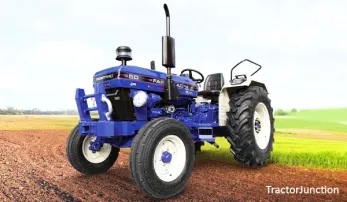
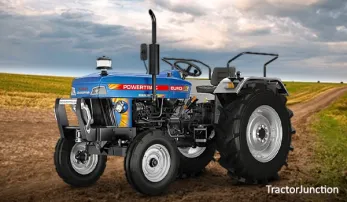
7 Reasons Why Tractors Overheat in Summer
Tractors are built for demanding farm work, but summer creates conditions that put extra pressure on the engine. Here are the main reasons behind tractor overheating.
-
The Outside Temperature Is Already High
When the surrounding temperature reaches 40–45°C, the engine finds it harder to release heat. Since the air outside is already hot, the cooling system cannot remove engine heat as efficiently. As a result, the engine temperature rises much faster than usual.
-
Heavy Farm Work During Summer
Summer is an important season for ploughing, tilling, sowing, transporting crops, and running water pumps. Many tractors operate continuously for 8 to 10 hours under heavy load. Longer working hours generate more engine heat, and if the cooling system cannot remove it quickly, overheating begins.
-
Dust and Crop Residue Block the Radiator
Dry fields create large amounts of dust and crop residue that collect on the radiator fins. Over time, this blocks airflow through the radiator. Without proper airflow, the cooling system becomes less effective and engine temperature starts increasing.
-
Low Coolant Level
Coolant evaporates faster during hot weather. Small leaks in hoses or loose pipe connections can also reduce coolant levels. When coolant becomes low, the engine cannot transfer heat properly.
Many farmers also use plain borewell water instead of recommended coolant. Hard water can create mineral deposits inside the radiator, reducing cooling efficiency.
-
Old Engine Oil Increases Heat
Engine oil helps reduce friction and removes heat from moving parts. When the oil becomes old or dirty, it loses its effectiveness. This increases friction inside the engine, generating additional heat and increasing the risk of overheating.
-
Water Shortage During Summer
Many villages face water shortages during the summer months. Farmers may not have easy access to clean water for radiator maintenance. Without regular coolant or water checks, tractors become more likely to overheat.
-
Worn-Out Fan Belts
The cooling fan depends on the fan belt. High summer temperatures can cause the belt to crack, loosen, or break. If the fan stops working properly, airflow through the radiator decreases and engine temperature rises quickly.
How Modern Tractors Handle Summer Heat Better
Many tractor manufacturers now design their machines to perform well even during extreme Indian summers. Some common features include:
-
High-Capacity Cooling System
Many modern tractors come with larger radiators and better water circulation systems. A larger radiator surface allows heat to escape faster, helping the engine stay cool during long working hours.
-
Built for Indian Working Conditions
Several tractors are tested under real farming conditions, including high temperatures, dusty fields, and continuous operation. This helps improve engine durability and cooling performance during peak summer.
-
Easy-to-Clean Radiator
Many tractors now offer better access to the radiator, making it easier to remove dust and crop residue using a brush or light water spray. A clean radiator improves airflow and cooling performance.
-
Heavy-Duty Engine Components
Modern engines use stronger materials and better-quality components that can withstand long working hours without excessive wear. Stronger cooling hoses, quality seals, and heat-resistant fan belts also improve overall reliability.
-
Wide Service Network
Most leading tractor brands have service centres and spare parts available across rural areas. Easy access to trained mechanics and genuine spare parts helps reduce downtime during the busy farming season.
-
Fuel-Efficient Engine Design
Modern tractor engines are designed for better fuel combustion. Complete fuel burning produces less unwanted heat and improves fuel efficiency while reducing engine stress.
-
Heat-Resistant Cooling Components
Many tractors now use stronger fan belts, better-quality hoses, and durable gaskets that perform well even under continuous summer operation.
Smart Tractor Technology Helps Prevent Overheating
Many premium tractors now offer connected technology that allows farmers to monitor machine health through mobile applications or digital displays.
These systems can help by:
- Monitoring tractor performance in real time
- Sending alerts when engine temperature rises
- Reminding farmers about scheduled servicing
- Notifying users about coolant or oil maintenance
- Reducing unexpected breakdowns through early warnings
- Tracking tractor location during field operations
Such features help farmers identify problems before they become costly repairs.
4 Warning Signs of Tractor Overheating
Tractors usually show warning signs before serious overheating occurs.
-
Rising Temperature Gauge
If the temperature needle moves toward the red zone, the engine is becoming too hot. Farmers should monitor this gauge regularly.
-
Loss of Engine Power
An overheating engine may struggle to pull implements or climb slopes. Reduced power often indicates excessive engine temperature.
-
Steam or Burning Smell
Steam coming from the engine or radiator, along with the smell of hot coolant, indicates serious overheating and requires immediate attention.
-
Excess Heat Around the Operator Platform
If the floorboard or engine area feels unusually hot, it may mean the engine is retaining excessive heat.
Whenever these warning signs appear, stop heavy work immediately, allow the engine to idle for a few minutes, then switch it off and let it cool naturally.
The Hidden Cost of Tractor Overheating
Overheating affects more than just the engine. It can interrupt field work, delay sowing or harvesting, increase repair expenses, and reduce overall productivity.
In severe cases, overheating can damage the head gasket, radiator, pistons, or even crack the engine block. Such repairs can cost thousands of rupees and keep the tractor out of service for several days or even weeks.
The Takeaway
Summer heat is a challenge for every farmer, but regular maintenance can greatly reduce the chances of tractor overheating. Clean the radiator frequently to remove dust and crop residue that block airflow. Check coolant levels every few days and always use the recommended coolant instead of plain water whenever possible.
Changing engine oil on time helps reduce friction and excess heat, while inspecting belts, hoses, and the cooling fan regularly can prevent unexpected breakdowns. Choosing a tractor with a good cooling system, durable components, and timely maintenance support can also improve performance during long summer working hours.
FAQs
Q1. Why do tractors overheat in summer?
Ans: High temperatures, long working hours, dusty fields, low coolant, blocked radiators, and worn engine parts all increase the chances of overheating.
Q2. How does dust cause tractor overheating?
Ans: Dust and crop residue block radiator fins, reducing airflow and preventing heat from escaping properly.
Q3. How often should coolant be checked?
Ans: During summer, coolant should be checked every few days, especially before long working hours.
Q4. Can I use plain borewell water instead of coolant?
Ans: It is not recommended. Hard water can create mineral deposits inside the radiator and reduce cooling efficiency.
Q5. What are the warning signs of an overheating tractor?
Ans: A rising temperature gauge, loss of power, steam, burning smell, and excessive heat around the engine are common warning signs.
Q6. What should I do if my tractor overheats?
Ans: Stop heavy work immediately, allow the engine to idle for a few minutes, then switch it off and let it cool naturally. Never open the radiator cap while the engine is hot.
Q7. Which tractor features help prevent overheating?
Ans: A larger radiator, efficient cooling system, heat-resistant fan belts, durable cooling components, and timely maintenance all help reduce overheating.
Q8. How can I keep my tractor's radiator working efficiently?
Ans: Clean the radiator regularly, maintain proper coolant levels, inspect hoses and belts, and follow the service schedule recommended by the manufacturer.
Certified Used Tractors

 Book Now


Top News
 November 12, 2026
Swaraj 855 FE 4WD and Mahindra Arjun Novo 605 DI-i 4WD are two well known
Read More November 14, 2026
Farming costs keep going up. Diesel, inputs and equipment all cost more every year. For
Read More October 28, 2026
Buying a tractor is an important investment for any farmer. The right tractor should meet
Read More October 26, 2026
Are you looking for a tractor for regular farming activities such as ploughing, cultivation, rotavating
Read More November 01, 2026
Choosing the right tractor is one of the biggest decisions a farmer makes, because the
Read More November 24, 2026
पावरट्रैक के डिजिट्रैक पोर्टफोलियो में अब 45 से 55 HP कैटेगरी के पांच मॉडल शामिल
Read More November 24, 2026
भारतीय बासमती धान की प्रमुख किस्मों के भाव में तेजी, पाकिस्तान के चावल निर्यात में
Read More November 24, 2026
कम बजट में पुराना ट्रैक्टर खरीदने की योजना बना रहे किसानों के लिए अच्छा विकल्प।
Read More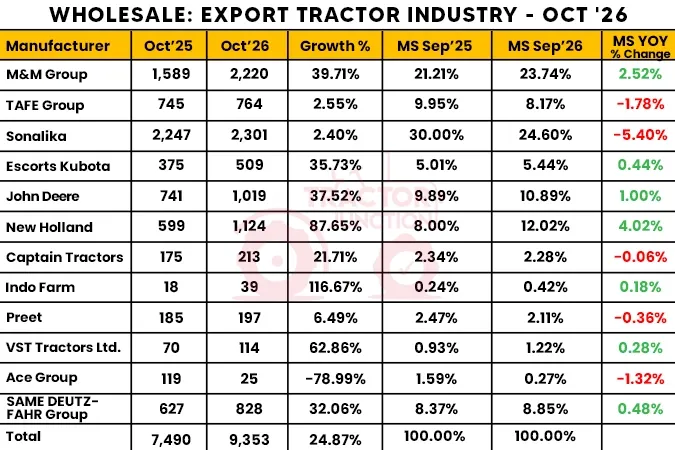 November 24, 2026
India's tractor export wholesale sales recorded strong growth in October 2026. Total exports increased to
Read More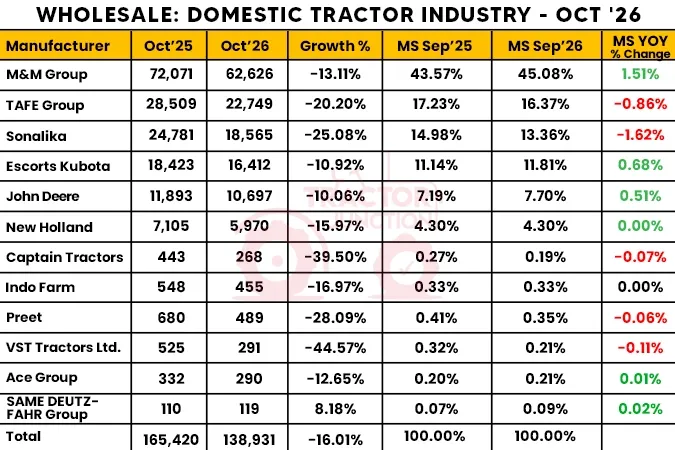 November 24, 2026
Domestic tractor wholesale sales reached 1,38,931 units in October 2026, following a strong festive-season base
Read MoreIn Other News